

Federal Courts Ruled Against Trump In Nearly 17,000 Out Of More Than 19,000 Federal ICE Detention Cases
The Trump Administration has lost nearly all of the ICE detention cases that have landed before the federal courts.

Under the horrifying reign of Donald J. Trump’s terror, the United States has launched its own version of the Gestapo, indiscriminately rounding up any human being who even looks like they could be an immigrant and tossing them into the deepest, darkest corners of ICE detention centers at an unprecedented rate — where they almost always face torturous horrors that the human mind would struggle to even begin to comprehend.
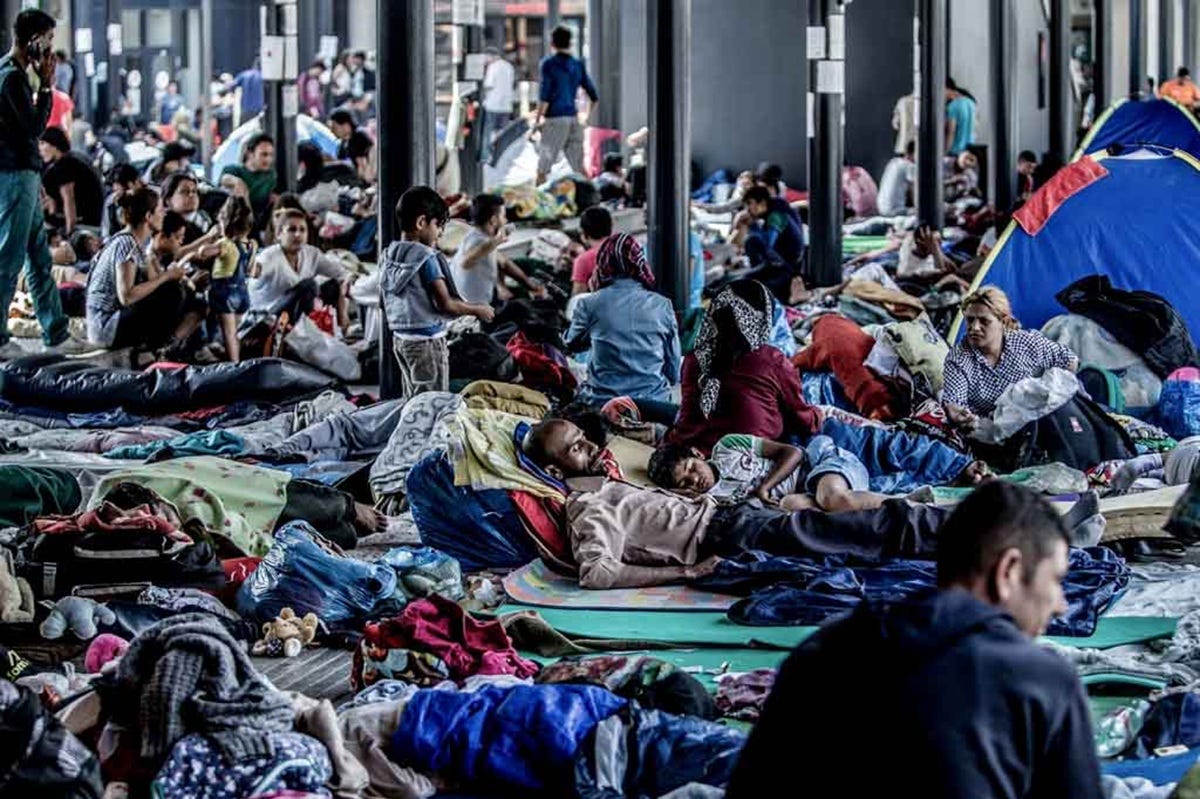
According to a disturbing new analysis from POLITICO, this indiscriminate war — that stops just short of targeting anyone that’s not blonde-haired and blue-eyed — against immigrants on American soil has facilitated an “all-out siege” on US federal courts that has “stretched the judiciary to the breaking point.” Over the course of Trump’s second term, in which he truly honed in on his vicious hatred of Brown people, the federal court system has heard more than 19,000 cases related to Immigration and Customs Enforcement’s detention practices alone.
Of those 19,400-plus cases in which the federal courts reached a formal ruling, just short of 17,000 of them were concluded with rulings against the Trump Administration, according to POLITICO’s case tracker.
While Trump’s crackdown on immigrants in the US as a whole has been disturbing enough in its own right, it is the tactics employed behind the four walls of his horrifying detention centers that have served as the epicenter of widespread controversy, criticism, and out-and-out outcry across the nation.
Just this week, The Guardian published a truly gut-churning, nauseating piece on Gabar Choli, a 40-year-old Kurdish asylum seeker who was swept up in Donald Trump’s wide-reaching immigration crackdown. Choli speaks of how he was detained in a solitary confinement medical cell inside the Port Isabel service processing center, an Immigration and Customs Enforcement (ICE) detention facility in south Texas, where he was shackled, pinned down, assaulted, and forcibly tube-fed by detention center guards who were trying to combat his hunger strike for more humane treatment inside these facilities.

The Trump Admin initiative now known as “Operation Metro Surge” in Minnesota’s Twin Cities area garnered perhaps the most widely recognized public outcry, earning ire from even some notable Republicans and sparking massive protests that bled into the entire US after ICE and Border Patrol agents shot two US citizens in cold blood on Minneapolis soil: Renee Good who was fatally shot in the face by ICE agent Jonathan Ross and VA ICU nurse Alex Pretti who was shot to death in the street by Border Patrol agent Jesus Ochoa and Customs and Border Protection officer Raymundo Gutierrez for defending a woman who was recording the agents during the public unrest.
The Minneapolis controversy alone led to the ousting of Homeland Security Secretary Kristi Noem (otherwise known as ICE Barbie), DHS Assistant Secretary for Public Affairs Tricia McLaughlin, and Border Patrol Commander Gregory Bovino; as the situation grew so disgustingly harrowing, even Donald Trump had to do something.
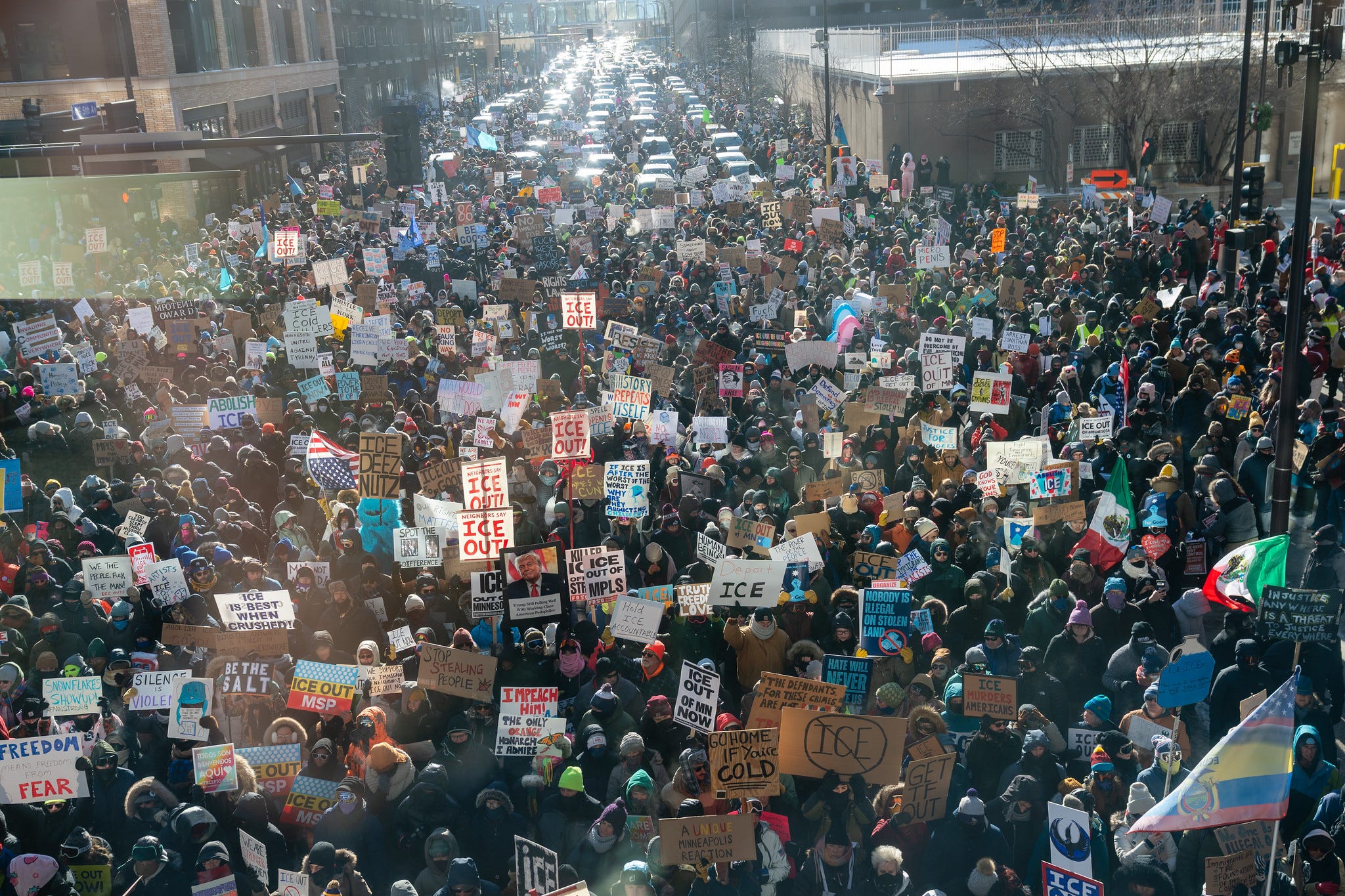
Donald Trump’s mass exodus of immigrants in this country has grown so deeply disturbing that even Republicans are beginning to turn their backs on his blatantly unabashed cruelty, as poll numbers prove that the American public is rapidly souring on his tactics.
Court challenges have flowed like water, with the administration losing a high percentage of them, even when they’re overseen by judges who were appointed to their benches by high-ranking Republicans or even Donald J. Trump himself.
POLITICO’s Kyle Cheney wrote that the spark that ignited all of this fire was “a seemingly mundane reinterpretation of a complex immigration law” tucked away in the folds of a two-page memo issued by Immigration and Customs Enforcement (ICE) on July 8, 2025. What appeared to be mundane and largely unimportant on the surface actually served as the vehicle through which the Trump Administration rehauled the federal government’s “detention tactics” in an “unprecedented” way.
Cheney explains that POLITICO has “reviewed thousands of ICE detention cases and spoken with more than a dozen detainees, lawyers and judges at the heart of this historic controversy.” All of them share a general consensus that the updated ICE policy has created an “extraordinary strain” on the United States federal court system by serving as the launch point for “tens of thousands of emergency lawsuits.”
Presently, 469 judges and counting have ruled that the July 8, 2025 ICE memo at the heart of this whole thing “was an illegal distortion of long-settled detention policy.” In fact, Cheney notes that Trump’s own first presidential administration “declined to adopt” this “novel legal theory,” indicating that Trump is now truly operating under the freedom of having absolutely nothing left to lose.
Prior to Trump’s second White House term, this newly implemented, broad imposition of mandatory detention without bond would only be applied to “people apprehended soon after crossing the border or who were deemed to be dangerous, not for those who had built law-abiding lives — married U.S. citizens, had children, held jobs, paid taxes — since they arrived,” as explained by Cheney in the sweeping POLITICO analysis.
Now, they apply it indiscriminately to everyone who finds themselves in ICE’s crosshairs.
“ICE’s new memo erased that distinction,” Cheney further explains. “Now, even people who had lived in the U.S. for years were treated as though they had just crossed the border and were ‘seeking’ to enter the U.S., no matter where they were apprehended or how many years ago they arrived.”


He writes that the memo “was the beginning of an all-out siege on the American justice system — one that would upend tens of thousands of lives, fracture decades of trust between the courts and the Justice Department, overwhelm court dockets in every corner of the country and provoke a lopsided rebuke from judges of every ideological stripe,” pointedly describing it as “an effort to erase the due process rights of millions of immigrants who have resided in the U.S. for years, even those without criminal records and people who have attended all of their ICE check-ins or immigration court proceedings.”


“The flood of cases has stretched the judiciary to a breaking point across the country,” Cheney penned. “Thousands of rulings, from hundreds of judges rushing to respond to the individual cases in front of them, have added up to an overwhelming rebuke of Trump’s unprecedented policy.”
Judge Fred Biery of the U.S. District Court for the Western District of Texas, who was appointed to the bench by President Bill Clinton, told the publication that his San Antonio courthouse would typically see around 1,500 civil cases in a year. This year, they had waded through a staggering 4,000, just by the month of May.
“We’ve never seen anything like this in my career,” Biery confessed.
San Antonio is far from the only US city that’s found itself absolutely buried in the “mountain of lawsuits” lit aflame by Donald Trump’s sadistic narcissism. Cases surged in Los Angeles and Chicago, and Florida court systems were inundated with suits related to the infamous “Alligator Alcatraz” facility in the Everglades.
But according to POLITICO’s analysis, “nowhere was hit harder than Minnesota,” in the destruction and despair left in the wake of Operation Metro Surge and the killings of Pretti and Good.
Judges and court staff across the nation are being forced to work at “record speed,” staying awake into the “wee hours of the morning,” in an attempt to get a handle on the onslaught of cases wrought by the Trump Administration’s desire for maximum cruelty and inhumanity.
The cold, hard numerical data is enough to explode heads on its own. But it’s more important now than ever to understand the core of unadulterated human suffering underneath the numbers.
Cheney writes:
Everyone on the receiving end of ICE’s amped-up detention philosophy — detainees themselves, their lawyers and the judges who hear their cases — described the past year as both logistically and emotionally draining. Every case is existential for the people being detained as well as their families and communities. That makes the work weightier for both attorneys and judges. And there are more cases than attorneys or judges were ever equipped to handle.
…
Asked whether the administration had any concerns about the impact of its mass detention policy on the families of those held by ICE, particularly U.S. citizen spouses and children, a Department of Homeland Security spokesperson responded simply: “No.”