

Buried Files Expose How Trump-Russia Compromise Probe Was Quietly Derailed
FBI agents had credible reason to believe that the President of the United States was personally compromised by a foreign adversary.

Despite the fact that his economy is a disaster, American citizens are suffering more than they have in decades, and he’s neck-deep into what’s shaping up to be a full-blown forever war with Iran, President Donald Trump has continued to focus much of his time and energy on his retribution plot against any and everyone who was involved in the infamous investigation into his ties to Russia, with respect to the 2016 presidential election that effectively sent the United States down its darkest path.
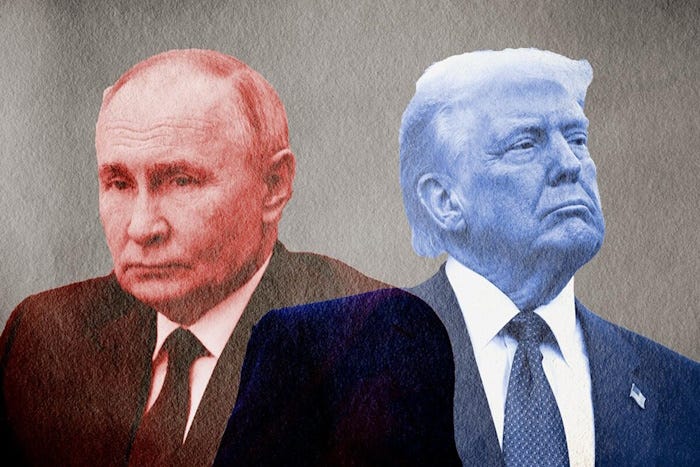
Federal prosecutors in South Florida have spent the last year trying to build a criminal case against the FBI agents alone who investigated Russia’s US election meddling.
But Trump isn’t satisfied with nickel-and-diming petty little cases against individuals. The man wants to entirely rewrite the history of the notorious Russia investigation. In connection with that goal, the Trump White House recently released a trove of once-classified memos from the Federal Bureau of Investigation, vehemently citing these memos as evidence that Trump was right all along — the “Deep State” was out to get him.
This would, of course, make for massive, scandalizing headlines and vicious vindication for a man whose first words were probably “Witch Hunt!” if it weren’t for this one little problem — absolutely nothing actually shows that.
When it comes to Trump’s claims of political persecution from the Deep State, this trove of newly declassified documents contains virtually no substance and absolutely nothing that serves to invalidate the FBI’s rationale for moving forward with their investigation into Trump’s ties with Russia.
However, what they do accomplish is pulling back the veil of an overlooked and long-forgotten subset of the FBI’s investigation.
The New York Times thoroughly reviewed these newly released FBI memos and published a scathing analysis of what they found.
Everyone who hasn’t been living under a rock for the past two decades is at least fundamentally aware of the FBI’s investigation into Donald Trump’s 2016 election — colloquially known as the Mueller Probe. While it resulted in a series of horrifying revelations about the president, it failed to produce any charges. But it was at least seen through to completion. However, there was an additional offshoot investigation connected to the Russia ordeal that was never seen through to the end, and most people had never even heard of it until Trump himself re-exposed it in his campaign for vindication and retribution.
The Times analysis confirms that just one week after Donald Trump fired FBI Director James Comey in May 2017, officials within the bureau quietly launched a secret investigation, bizarrely coded “Oxferd Comma.” The probe contained two distinct paths: determining whether Trump’s ousting of Comey could be classified as obstruction of justice and a counterintelligence investigation into whether Donald J. Trump was personally compromised by Russia.
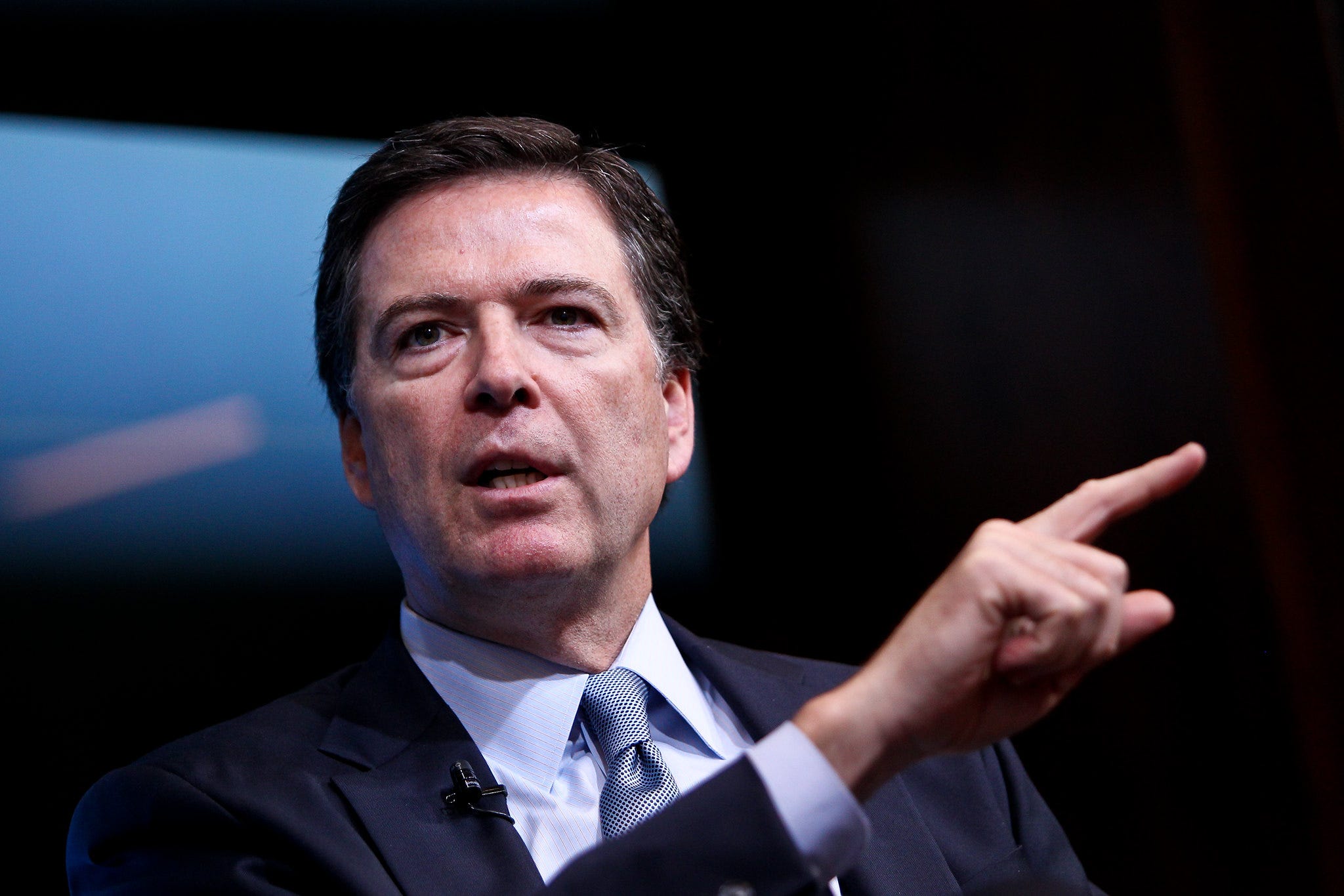
Former FBI Director Robert Mueller was eventually appointed by then-Deputy Attorney General Rod Rosenstein to spearhead a special counsel investigation. Rosenstein very specifically only authorized Mueller to investigate whether any crimes were committed. As such, the second avenue of this scandalous investigation, the counterintelligence probe that was meant to determine if Donald Trump, the president of the United States, was fundamentally compromised by a volatile foreign nation, was tossed to the wayside.
Counterintelligence investigations are a categorically unique beast in comparison to a criminal inquiry. They’re not meant to specifically determine whether or not a crime was committed, by legal definitions, but instead focus solely on whether or not a foreign adversary is compromising and undermining the nation. They are always heavily classified and unfold over several years or even decades.
The Times reports that one of the classified FBI memos that was just made public by the Trump White House read: “The goal of the investigation is to determine if President Trump is or was directed by, controlled by, and/or coordinated activities with, the Russian Federation in a manner constituting a threat to the national security of the United States and/or a violation of federal criminal statutes.”
The memos confirm that the FBI had already come to the conclusion that the Russian government had interfered in the 2016 United States presidential election for the sole purpose of installing Donald Trump in the White House. The FBI was aware that Russians had repeatedly offered their assistance with his campaign and knew that the Trump Campaign had instigated a heavy push within the Republican Party to embrace a position in favor of Russia in its war against Ukraine as a leg of his 2016 campaign platform.
The Bureau was also fully aware that Donald Trump had been viciously pressuring James Comey to drop his investigation into the ties between Russia and his campaign before ultimately firing Comey.
In the memo connected to formally opening the investigation, the FBI said, “Open-source information indicates that President Trump has had a longstanding business and real estate ties to Russia and the former Soviet states, stemming from the 1980s. In 2008, President Trump’s son claimed that Russians made up a ‘disproportionate cross-section’ of many of President Trump’s assets. Open-source information also indicates that President Trump has had business ties in the United States and Russia with named Russian oligarchs.”
Trump has long maintained that his personal and business ties to Russia were minimal and irrelevant. But the FBI wasn’t convinced, as agents sought to determine whether Trump’s decision to oust Comey was really an effort to hide the ties he had to Russia.
The same day that the Oxferd Comma investigation was formally opened, then-acting FBI Director Andrew G McCabe immediately briefed then-Deputy Attorney General R. J. Rosenstein on their decision.
The very next day, Rosenstein made the stunning decision to appoint Robert S. Mueller III as special counsel to investigate the potential crimes of Donald J. Trump and his presidential campaign.
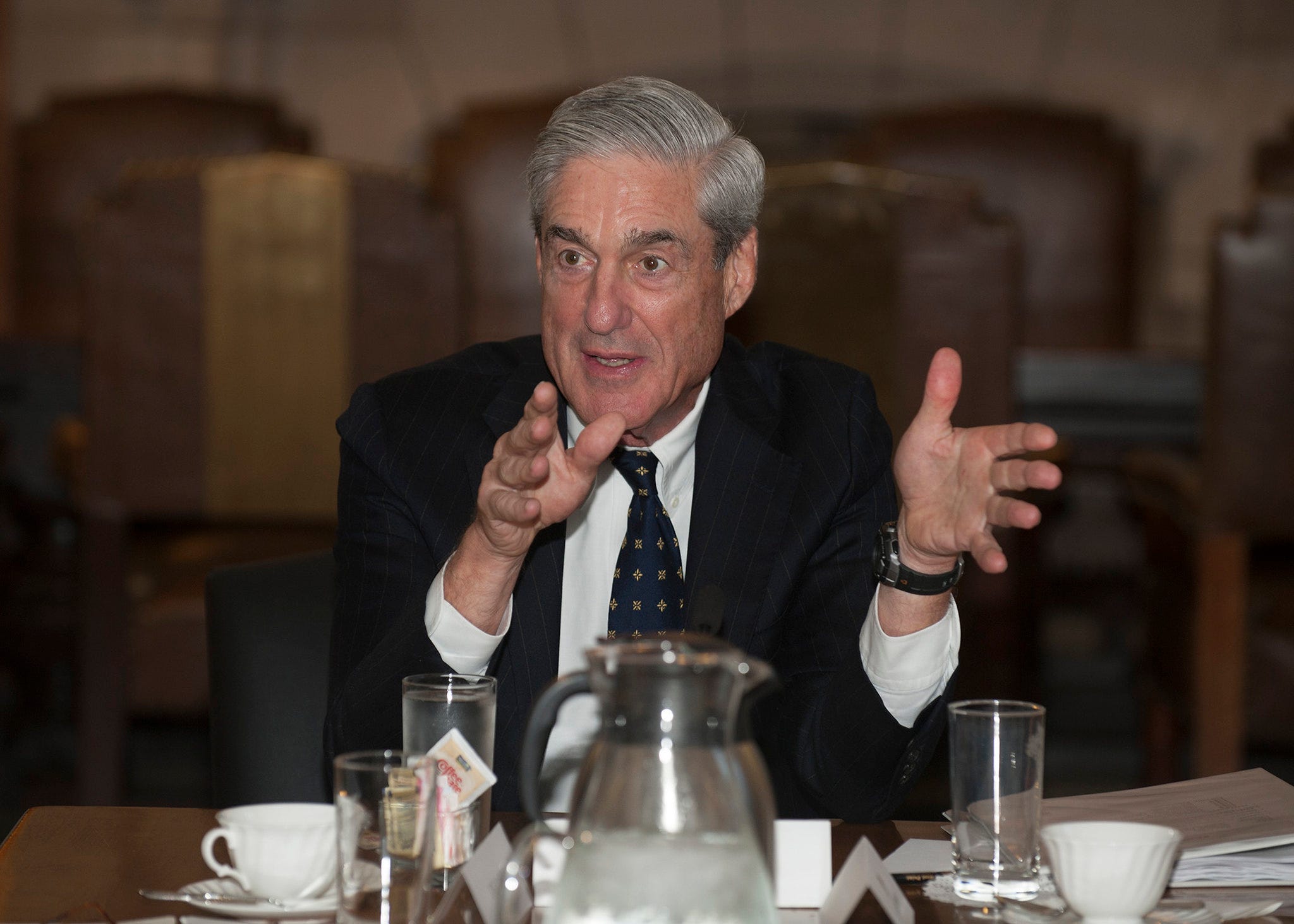
No one knew that this decision would serve to completely derail the counterintelligence investigation into whether or not Donald Trump was personally compromised by Russia.
Rosenstein was very specific when he appointed Mueller as Special Counsel: he was only to look for crimes, and a years long, open-ended probe was simply unacceptable.
Mueller interpreted these instructions with a painful degree of literality.
Rosenstein strictly forbade Mueller from conducting the counterintelligence investigation into Trump, but responsibility for that investigation was transferred to the FBI agents on Mueller’s team, according to the memos.
However, Mueller had been instructed to only focus on literal crimes, not potential ties, resulting in the counterintelligence investigation falling to the wayside.
When Mueller’s report was finally released in 2019, it determined that there was no evidence that Trump had personally conspired with Russia to meddle in the 2016 election. Mueller declined to make any determination with respect to the obstruction of justice allegations over Comey’s firing. And the section on Trump’s personal ties to Russia, including whether or not he was compromised by the foreign nation and presented a counterintelligence threat to the United States, was absent entirely.
The newly released memos have confirmed that the counterintelligence investigation was closed in 2019, with no conclusion, as it never truly even began, leaving Americans to wonder if there’s a Russian asset sitting in the People’s House.